Austin EMS transport and faster access to critical care in Central Texas
Austin EMS transport is part of a larger emergency response system that can move critically ill patients to higher levels of care when ground travel is not the safest or fastest option. In the Cedar Creek area, PHI Air Medical has expanded its advanced in-flight capabilities to support patients with serious respiratory, cardiac, and trauma-related emergencies.
For healthcare workers, first responders, and community members, this kind of service shows how important coordination is during a time-sensitive event. CPR, AED use, and early first aid remain the first steps in many emergencies, but air medical transport can become an essential bridge when a patient needs specialized care quickly.
What changed at the Cedar Creek base
The Cedar Creek base added more advanced options for transporting critically ill patients, including support for severe breathing problems, pulmonary hypertension, and organ failure. According to the company, some of these capabilities were introduced in Central Texas for the first time through this base.
Among the added services are therapies and transport support for patients who need complex respiratory assistance during flight. That expansion matters in a region where rural roads, traffic delays, and distance to specialty centers can make emergency response more difficult.
Why Austin EMS transport matters during cardiac and respiratory emergencies
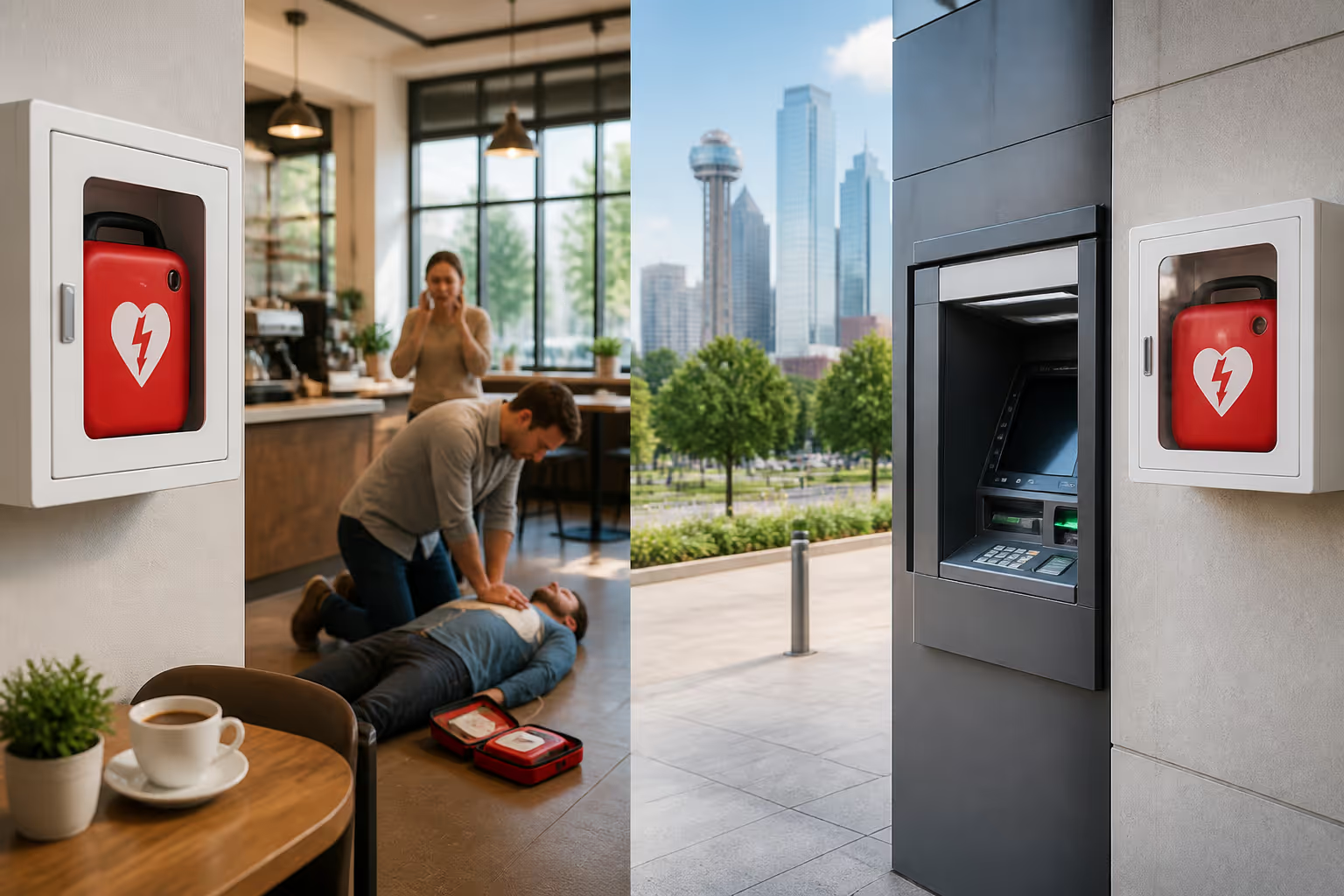
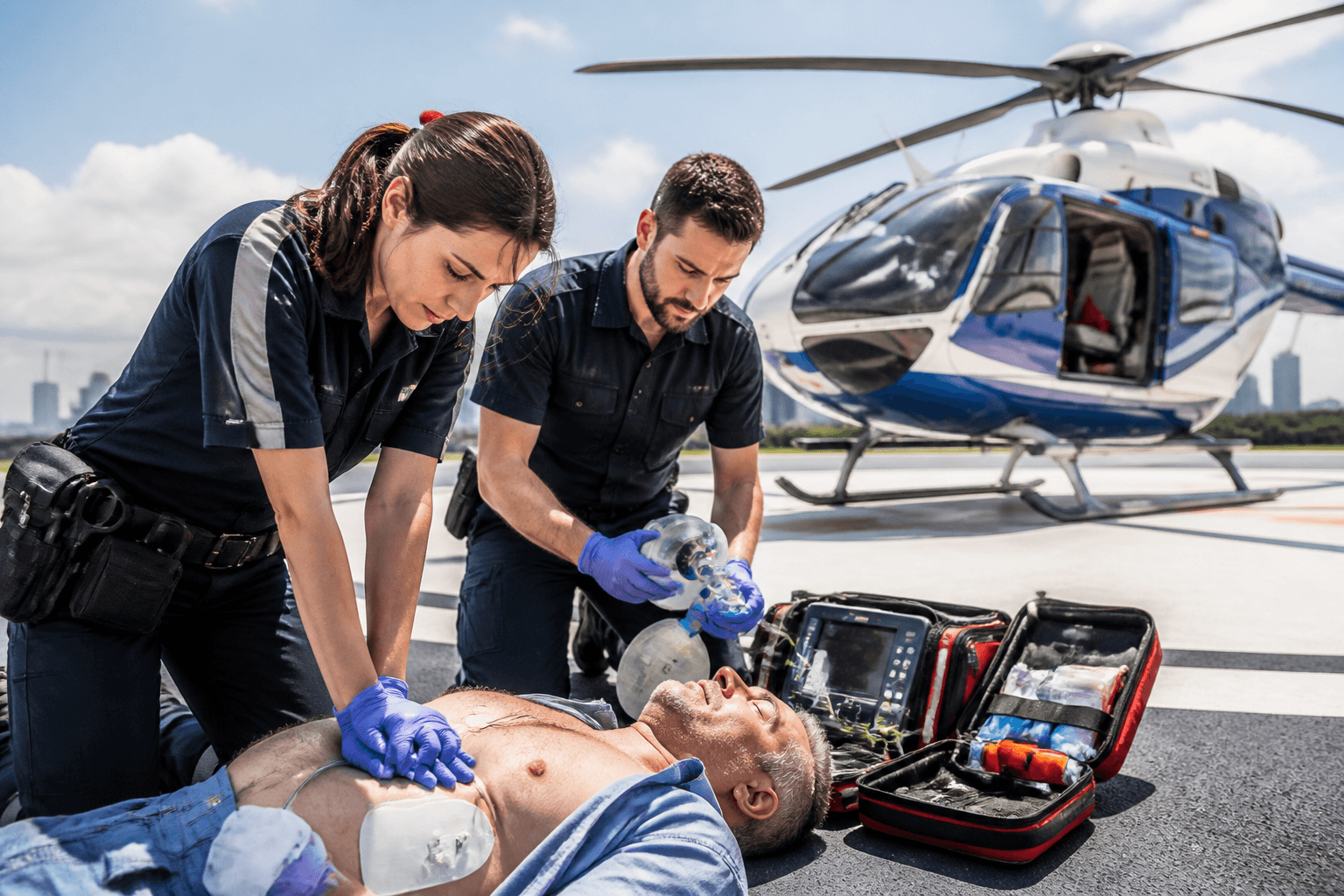
When a person goes into cardiac arrest or has a severe breathing emergency, every minute counts. Bystanders may need to start CPR, use an AED if one is available, and call 911 immediately. Paramedics and EMS crews then assess whether the patient needs continued stabilization, hospital care, or specialized transport by helicopter.
In situations involving organ failure, respiratory distress, or serious trauma, air medical teams can help maintain continuity of care while moving the patient to the right facility. That is especially important when a patient’s condition may change rapidly during transport.
This article is for general educational purposes only and is not a substitute for professional medical advice, diagnosis, treatment, or certified CPR training. In an emergency, call 911 immediately.
Who should pay attention to this update
This news is relevant for EMS professionals, nurses, respiratory therapists, hospital staff, and residents across the Austin area who want to understand how emergency transport is evolving. It is also useful for employers, school personnel, coaches, and caregivers who are often the first to react before EMS arrives.
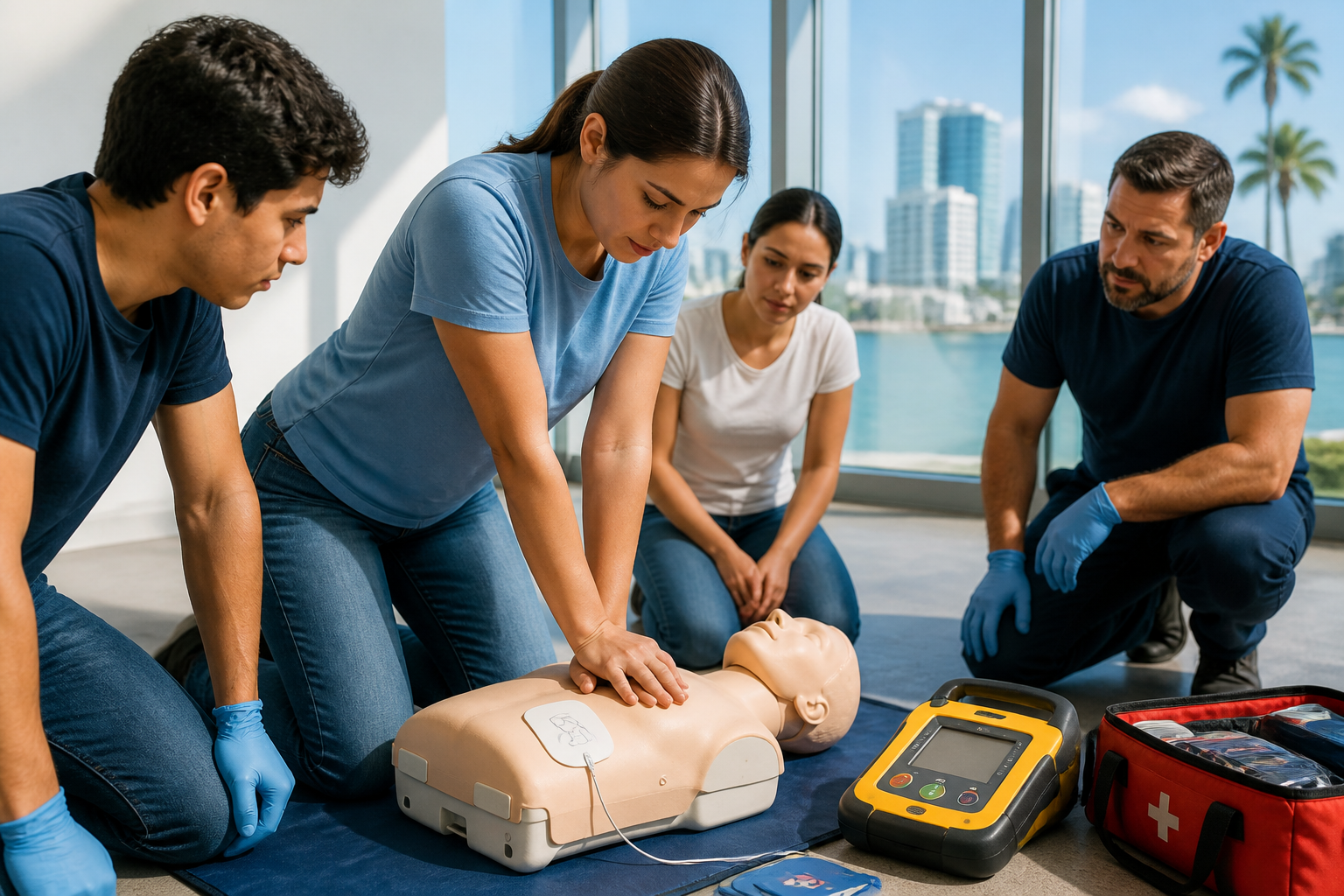
If someone collapses, becomes unresponsive, or struggles to breathe, the right early actions are simple: check the scene, call 911, begin CPR if needed, and use an AED as soon as it is available. Training helps people act with confidence while waiting for advanced care.
What makes this development important for the community
Central Texas continues to grow, and with that growth comes a greater need for reliable emergency response options. Expanded air transport can help shorten the gap between the scene of an emergency and the specialty care a patient may need.
For families in Bastrop County and nearby communities, the Cedar Creek base also offers a financial benefit tied to a local service agreement for eligible pickups within its service area. That kind of arrangement can make emergency transport more predictable for residents who worry about costs during a crisis.
How CPR training supports the full chain of survival
Even with advanced air medical resources, the outcome of a cardiac emergency often depends on what happens before transport begins. CPR keeps blood and oxygen moving. An AED can restore a shockable rhythm in certain cases. First aid can help control bleeding or protect a person until EMS arrives.
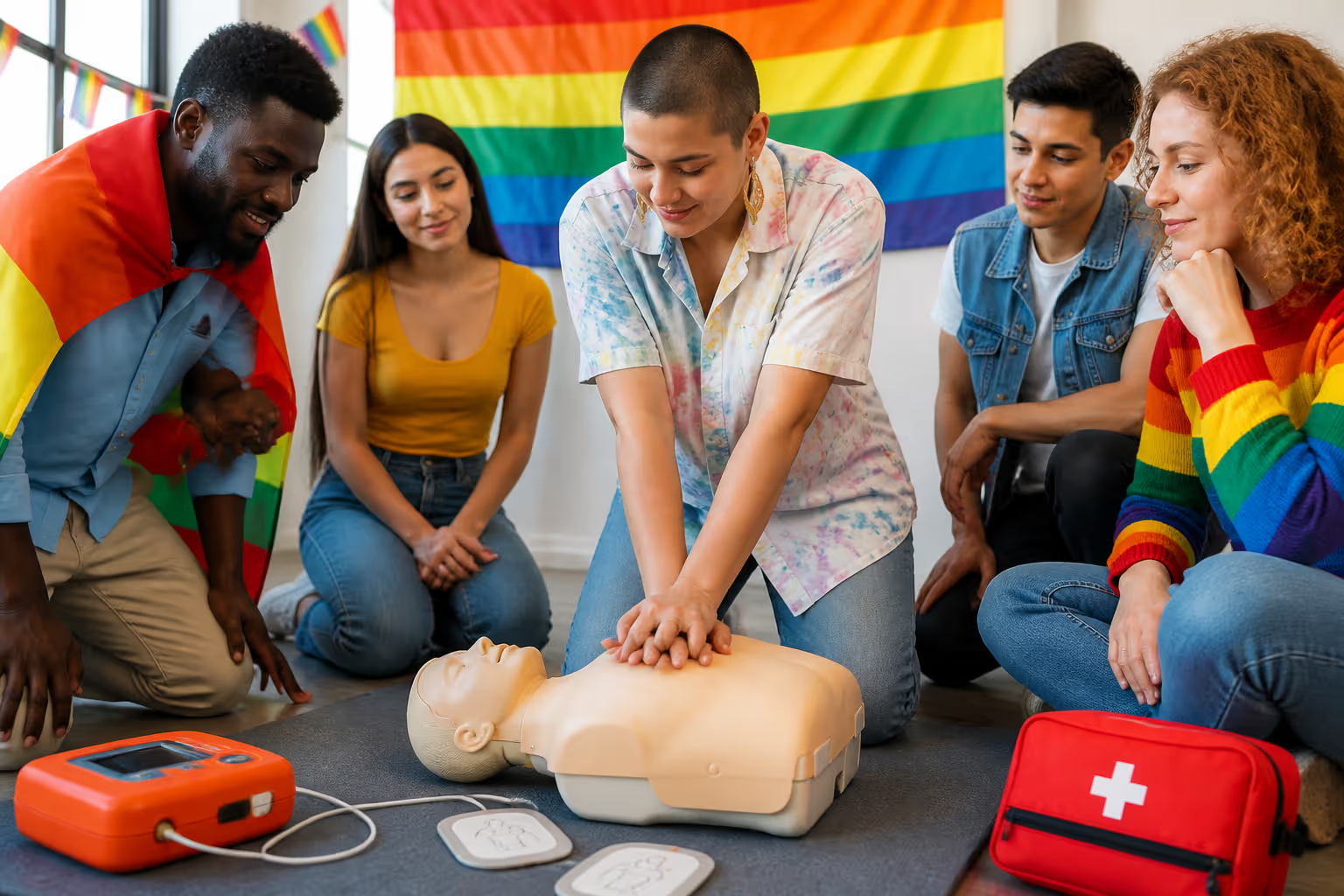
That is why CPR Certification Labs encourages healthcare teams and community members to stay current on lifesaving skills. Training does not replace emergency responders, but it helps bridge the first critical minutes before Austin EMS transport or air medical care takes over.
Local relevance for learners in the Houston Clear Lake area
People in League City, Clear Lake, and nearby communities may not use air transport every day, but they still benefit from understanding the broader emergency system across Texas. Whether the emergency is on a highway, at work, or at home, a prepared responder can make a meaningful difference before specialized crews arrive.
If you are looking for CPR, BLS, or ACLS training, visit Houston Clear Lake to learn more about classes and scheduling.
Nearby facilities and emergency response awareness
Residents often think first of local hospitals and ambulance services, but air medical transport adds another layer of access when time and distance matter. Knowing how to respond at the scene is still the first priority. Start CPR, retrieve an AED if one is nearby, and wait for EMS direction until advanced crews arrive.
In a region as spread out as Central Texas, that combined approach—bystander action, ground EMS, and air medical support—helps create a stronger emergency response network for cardiac, respiratory, and trauma patients.
FAQ
When should I call 911 during a possible cardiac emergency?
Call 911 right away if a person is unresponsive, not breathing normally, or shows signs of a life-threatening emergency.
Can CPR help while waiting for air medical transport?
Yes. CPR can help maintain circulation until EMS or air medical crews take over.
Why is an AED important?
An AED can be critical in a sudden cardiac arrest situation because it may deliver a shock if the heart rhythm is treatable.
About our Houston Clear Lake office
- Address: 100 Perkins Ave, Suite E
- Phone: (713) 987 3709
- Email: clearlake@cprcertificationlabs.com
- Hours:
Monday – Sunday: 6am - 12am