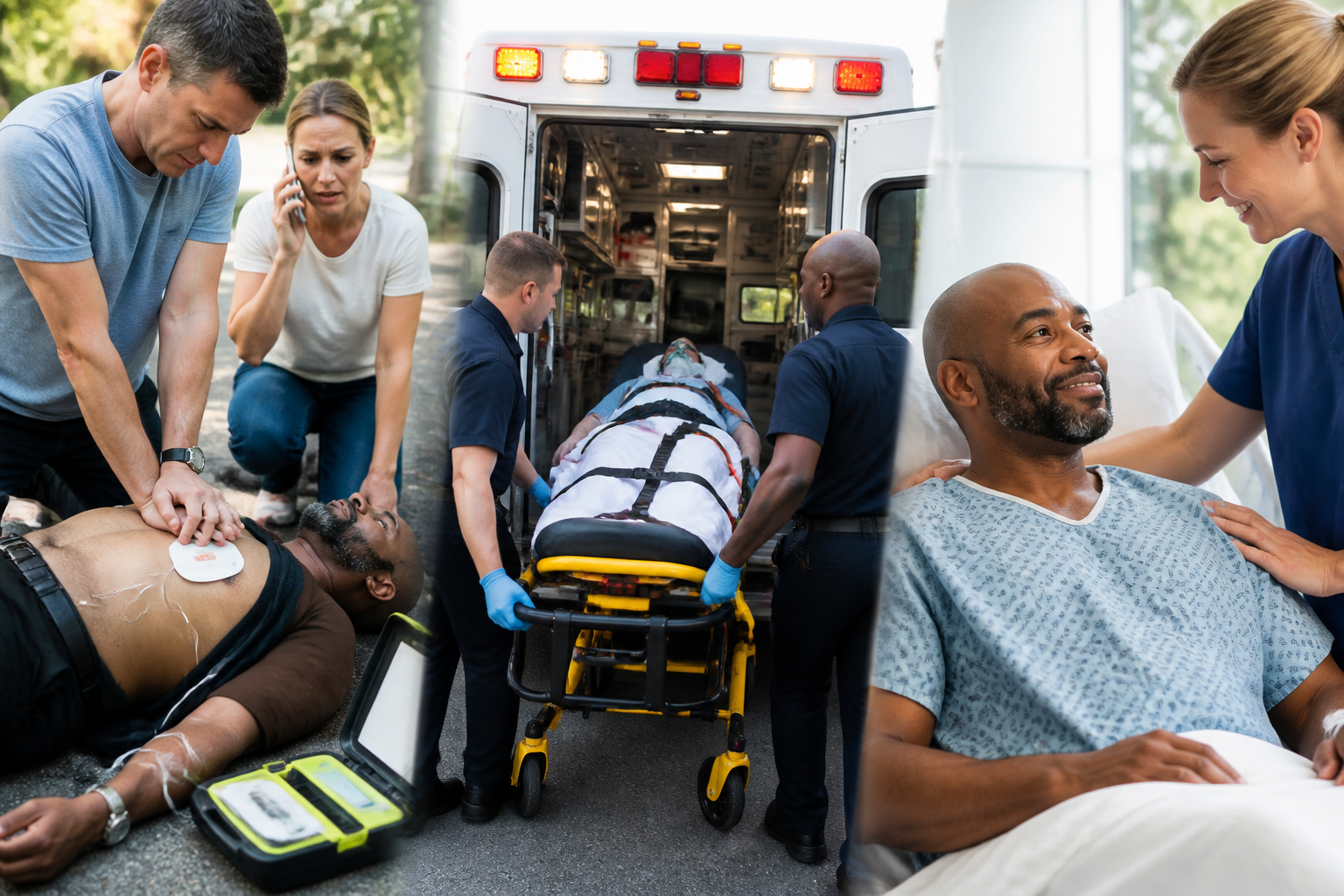
Fort Worth cardiac arrest survivor story centered on CPR, EMS response, and ECMO lifesaving care at Medical City Fort Worth
This Fort Worth cardiac arrest survivor story centered on CPR, EMS response, and ECMO lifesaving care at Medical City Fort Worth shows how fast action, coordinated transport, and specialized hospital treatment can come together after a sudden collapse. It is also a reminder that CPR, AED use, and emergency response skills matter long before a patient reaches the hospital.
In the reported case, Demry Miller collapsed at work in Granbury after a heart attack caused his heart to stop. Coworkers started CPR, an ambulance transported him for urgent care, and Medical City Fort Worth later used ECMO as part of advanced treatment. The story connects everyday preparedness with highly specialized care in a way that is relevant for any community.
The role of ECMO at Medical City Fort Worth
ECMO, or extracorporeal membrane oxygenation, is a machine that supports both heart and lung function outside the body. It can give the heart and lungs time to rest while clinicians address the underlying emergency. In situations where a patient is critically ill and other options are limited, ECMO may provide an important bridge to recovery.
That is what makes this case notable. The patient did not arrive at ECMO first. The chain began with coworkers recognizing that something was wrong, followed by CPR and EMS response, and then advanced hospital care. Each step mattered. If the first response had been delayed, the later treatment options could have been harder to use effectively.
For readers, the lesson is simple: when a person suddenly collapses, the goal is not to wait and wonder. The goal is to start the emergency response process immediately and keep it moving until professional help takes over.
What happened in this Fort Worth case
According to the Fort Worth Report, Miller was a healthy 53-year-old when he suddenly collapsed at work. His coworkers performed CPR, paramedics transported him by ambulance, and he was eventually treated with ECMO at Medical City Fort Worth. Later, the patient and his family joined caregivers for a reunion marked by gratitude and relief.
Stories like this are powerful because they show how survival can depend on timing. A cardiac emergency can begin without warning, and the people closest to the scene may be the ones who make the biggest difference before EMS arrives.
Why CPR and AED readiness matter
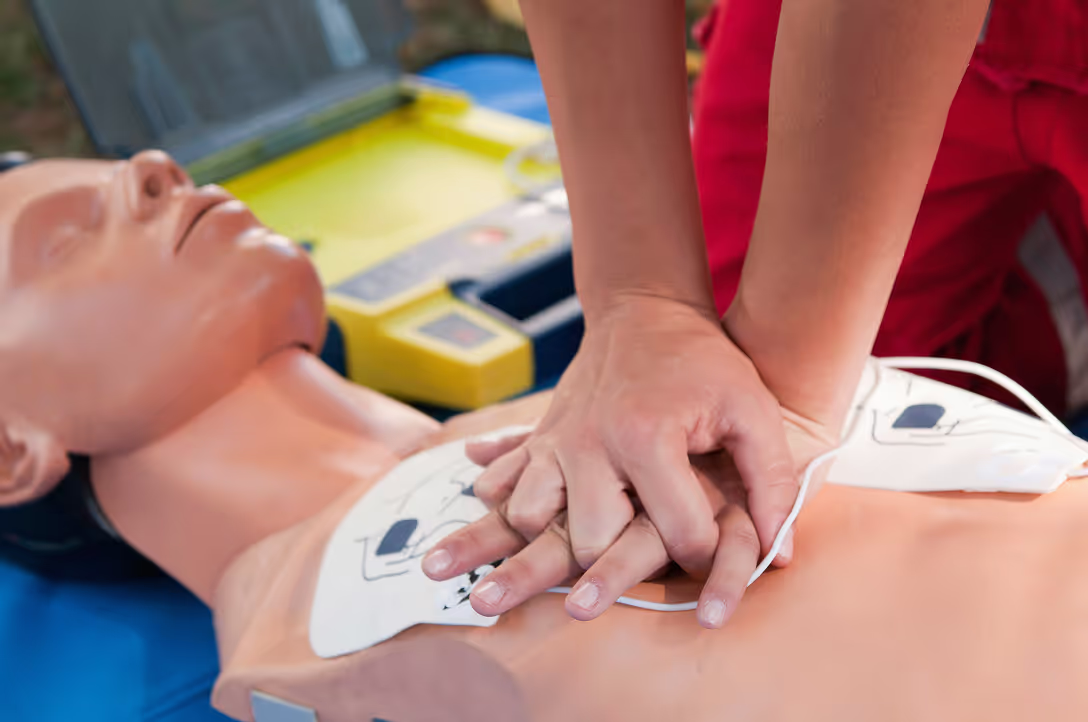
CPR helps maintain blood flow when the heart has stopped or is not pumping effectively. That circulation can support the brain and other vital organs during the most critical minutes of a cardiac arrest. An AED can also be essential because it helps assess whether a shock may be needed for certain rhythms.
Training does not mean a bystander must know everything. It means knowing the basics well enough to act: check for responsiveness, call 911, begin compressions if the person is unresponsive and not breathing normally, and ask someone nearby to bring an AED. Those steps are the foundation of emergency response in workplaces, gyms, schools, churches, and community spaces.
For people who want to be prepared for the next emergency, CPR Certification Labs also offers training resources that help build confidence with CPR and AED training for everyday readiness.
Who can learn from this story
This article is useful for healthcare professionals, employers, teachers, coaches, volunteers, and family members who want to understand how cardiac arrest response works in real life. It is also helpful for anyone considering CPR, first aid, or AED training.
- Healthcare professionals who reinforce the chain of survival
- Employers building an emergency response plan
- Teachers, coaches, and volunteers responsible for group safety
- Family members who want to know what to expect during a cardiac emergency
- Adults who want practical CPR, AED, and first aid skills
The common thread is preparation. When more people know what to do, the response can start sooner and move more smoothly.
Local relevance for Fort Worth and North Texas
Fort Worth and the wider North Texas region include workplaces, retail settings, schools, and public venues where emergencies can happen quickly. A person may appear healthy and still suffer a sudden cardiac event. That is why CPR and emergency response training are not just for hospitals.
Medical City Fort Worth’s ECMO program also shows how advanced care has become part of the local lifesaving network. The hospital’s ability to support critically ill patients gives clinicians another option when standard treatment is not enough. For families, that can mean hope during a very difficult time.
Nearby facilities and local references matter because they show where care can be found when time is short. In this story, the important touchpoints were the workplace where CPR began, the ambulance that moved the patient to care, and the Fort Worth hospital team that continued treatment.
What to do if someone collapses
If a person suddenly collapses, focus on the basics. Make sure the scene is safe, call 911 immediately, and check whether the person is responsive and breathing normally. If not, begin CPR if you are trained. Send someone to find an AED and use it as soon as it is available, following the device prompts until EMS takes over.
This article is for general educational purposes only and is not a substitute for professional medical advice, diagnosis, treatment, or certified CPR training. In an emergency, call 911 immediately.
That guidance is not meant to replace professional care. It is meant to help readers understand how fast, organized action can support survival before advanced treatment begins.
Source attribution: Fort Worth Report
Why CPR training still matters
Training matters because emergencies are stressful and time is short. CPR classes teach when to start compressions, how to continue until help arrives, and how to work with an AED if one is available. First aid training adds practical knowledge for other urgent situations that may happen alongside a cardiac event.
For anyone in the Fort Worth area who wants to strengthen their emergency response skills, local training can help turn uncertainty into action. Confidence builds with practice, and practice can make a difference when seconds count.
To learn more about class options and office details, visit the Leesburg office page at CPR Certification Labs.
FAQ
Why is CPR important before EMS arrives?
CPR can help keep blood moving during cardiac arrest until paramedics and hospital teams take over. Early action can support the brain and other organs during the most critical minutes.
When should someone use an AED?
If a person is unresponsive and not breathing normally, an AED should be used as soon as it is available. Follow the device instructions and continue until EMS takes over.
What makes ECMO different from CPR?
CPR is an immediate emergency response that helps circulate blood manually. ECMO is an advanced hospital technology that can temporarily take over some heart and lung function in selected critical cases.
About our Leesburg office
- Address: 19 Wirt St. SW, Suite 102
- Phone: (571) 601 3318
- Email: leesburg@cprcertificationlabs.com
- Hours:
6am - 12am - 7 Days a Week!