Fort Worth cardiac arrest survivor story centered on CPR, EMS response, and ECMO lifesaving care at Medical City Fort Worth
This Fort Worth cardiac arrest survivor story centered on CPR, EMS response, and ECMO lifesaving care at Medical City Fort Worth shows how fast a routine day can turn into a life-threatening emergency. It also shows why early CPR, rapid transport, and advanced hospital support can matter so much when the heart suddenly stops.
For healthcare professionals, workplace leaders, and family caregivers, this kind of case is a reminder that preparedness is not abstract. It is practical, time-sensitive, and often the difference between delay and action.
What happened in this Fort Worth cardiac arrest survivor story
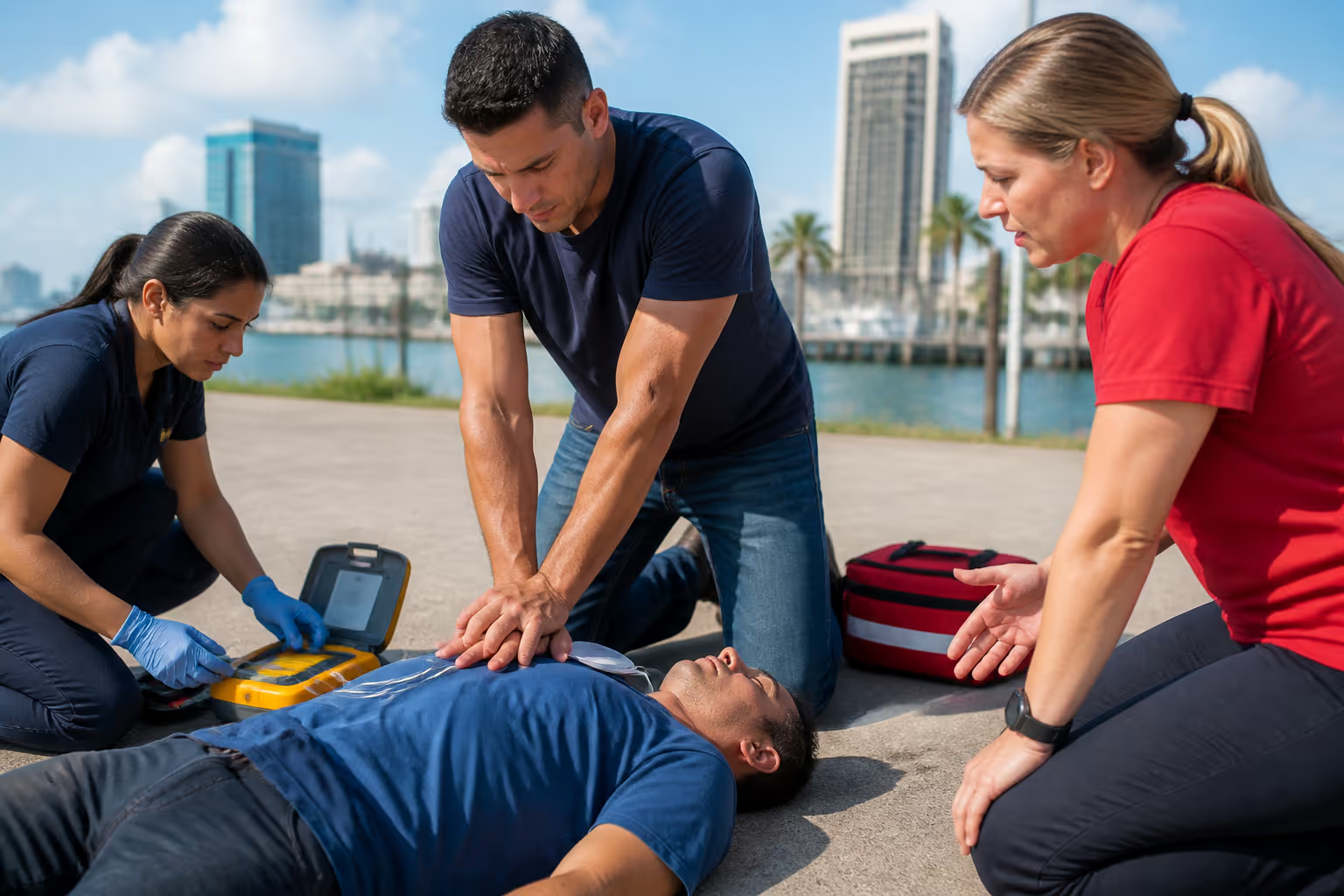
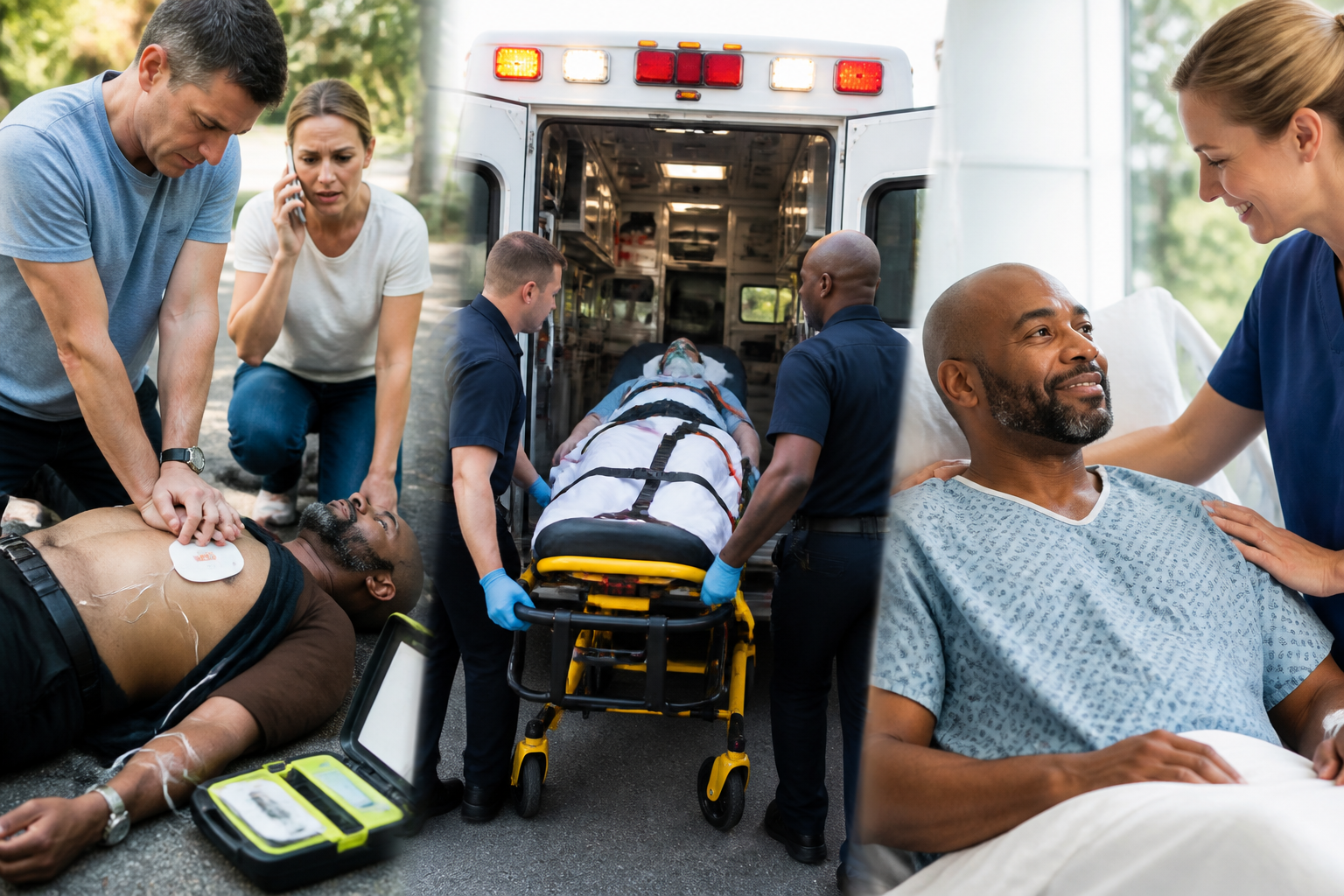
Demry Miller was working in Granbury when he collapsed from a sudden cardiac arrest. Coworkers responded immediately and started CPR before he was taken by ambulance to a nearby hospital. After that first emergency phase, clinicians determined he needed extracorporeal membrane oxygenation, or ECMO, at Medical City Fort Worth.
That sequence matters. Bystander CPR kept the chain of survival moving, EMS provided urgent transport, and the hospital team escalated to specialized care when standard measures were not enough. Miller later described the caregivers who treated him as “angels in skin suits,” a quote that reflects the gratitude many families feel after a critical event.
His wife, Johnnie Miller, also described the shock of hearing unfamiliar medical terms during a crisis and emphasized how meaningful it was to have nurses guide the family through the uncertainty. Their story is not only about survival. It is also about the human side of emergency medicine: communication, calm under pressure, and trust during a frightening moment.
Why CPR and emergency response matter in cardiac arrest
Cardiac arrest is different from a heart attack. In cardiac arrest, the heart stops pumping effectively and the person may collapse, become unresponsive, or stop breathing normally. In that moment, CPR helps maintain blood flow to the brain and vital organs until professional help arrives.
In emergencies like this, the first few minutes are critical. If coworkers or bystanders know what to do, they can buy time for EMS and hospital teams to take over. That is why CPR training and AED awareness are such important parts of emergency response planning in workplaces, schools, gyms, and public spaces.
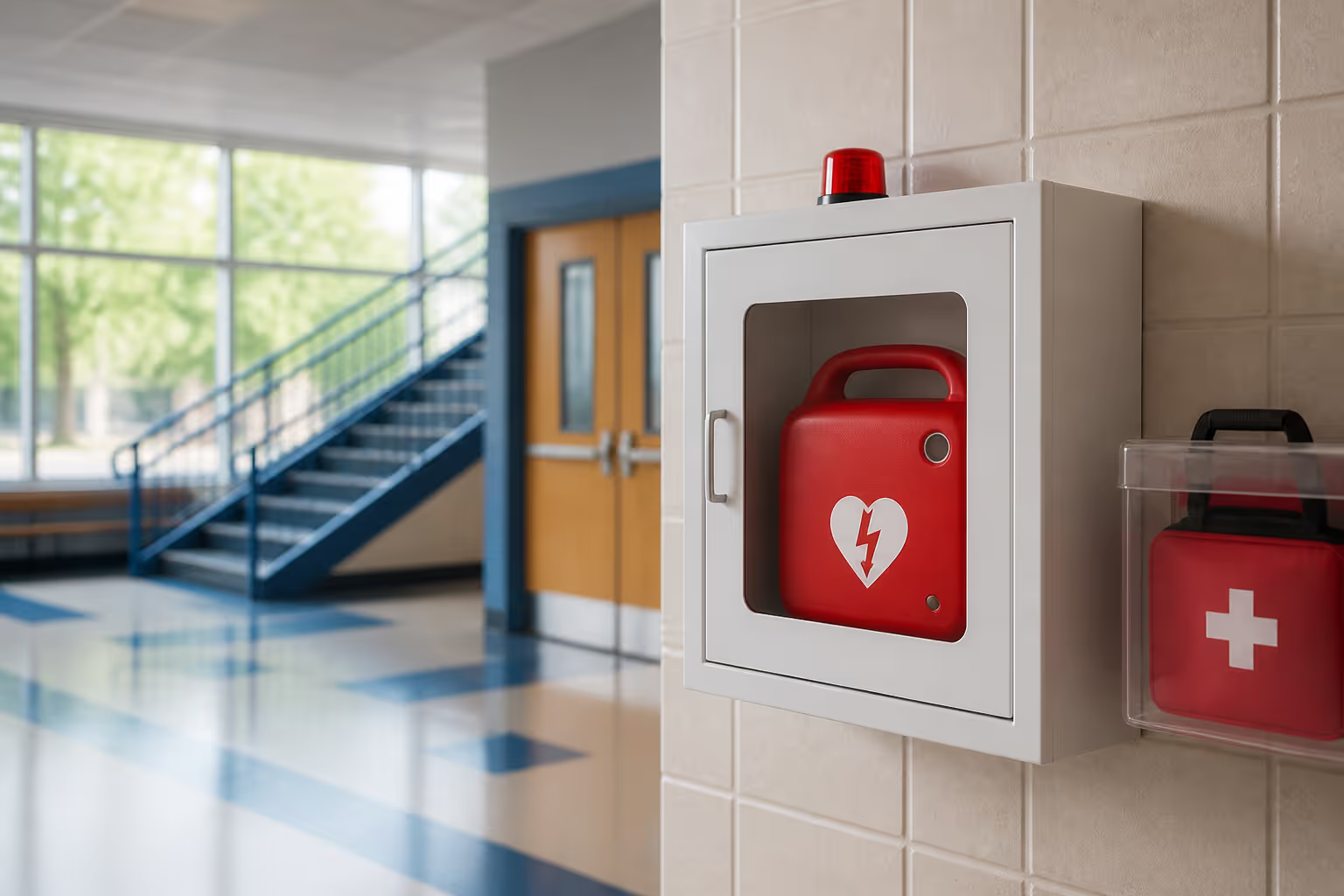
When an AED is available, it can also be part of the response. An AED can analyze a heart rhythm and help guide the next steps while responders continue care. Even when an AED is not nearby, starting CPR right away is still one of the most important actions a bystander can take.
How ECMO helps when standard treatment is not enough
ECMO, or extracorporeal membrane oxygenation, is a machine that temporarily acts as a patient’s heart and lungs. It pumps and oxygenates blood outside the body so those organs can rest while clinicians treat the underlying problem. In very severe cases, it can provide a bridge when other options have been exhausted.
At Medical City Fort Worth, the ECMO program has expanded as demand has grown. More patients are being referred for this advanced support, especially when they are critically ill and other treatments may not be sufficient. For teams treating high-risk patients, having ECMO available can also create more flexibility during complex procedures because there is a backup plan if complications occur.
Medical City Fort Worth’s growth in ECMO capacity also reflects the needs of a growing region. As Tarrant County and nearby communities continue to expand, access to advanced emergency care becomes even more important for patients who need specialized treatment fast.
Who this Fort Worth cardiac arrest survivor story is for
This story is relevant to several groups across Fort Worth and North Texas:
- Healthcare professionals: It reinforces the value of rapid escalation, teamwork, and advanced critical care options.
- Employers and safety leaders: It highlights why CPR and AED readiness should be part of workplace planning.
- Families and caregivers: It shows how quickly a healthy adult can experience a sudden emergency.
- Community members: It is a reminder to learn CPR, know where AEDs are located, and act without hesitation.
The lesson is not limited to a hospital setting. A cardiac emergency can happen at work, at home, in a store, or in a community space. The people nearby are often the first link in the chain of survival.
Local Fort Worth context and why readiness matters
Fort Worth is home to active workplaces, busy roadways, and growing neighborhoods, which means emergency preparedness is part of everyday life. When someone collapses, the response may involve coworkers, bystanders, EMS crews, and hospital specialists all working together in sequence.
For anyone in the Fort Worth area, this is a strong reason to keep CPR skills current and to understand how first aid, AED use, and emergency response fit together. Training does not replace professional care, but it helps people take the right first step while waiting for EMS.
For local learners who want convenient training in the area, CPR Certification Labs serves the community through its Fort Worth office at Fort Worth office. The office is located at 6940 River Park Circle, Fort Worth, TX, and is open Monday through Sunday from 7am to 8pm.
Why CPR Certification Labs is a practical choice
CPR Certification Labs focuses on clear, hands-on instruction for CPR, AED, and first aid. The goal is to help professionals and everyday responders feel more prepared in real-world situations, not just familiar with the steps in theory.
That matters for people who work in healthcare, education, fitness, hospitality, public safety, and other settings where emergency response may be needed quickly. Training can help learners recognize when to act, how to coordinate with others, and how to respond while waiting for EMS.
In a case like Miller’s, preparation happened at several levels: coworkers recognized the emergency, EMS responded quickly, and the hospital team used advanced resources such as ECMO. CPR education supports the first part of that chain and gives more people the confidence to begin.
Nearby medical relevance and community takeaway
Medical City Fort Worth illustrates how advanced care can change outcomes for patients who arrive in critical condition. Just as important, though, is the role of the people who act before the hospital transfer happens. CPR, quick communication, and calling for help immediately all affect what happens next.
When someone is unresponsive and not breathing normally, do not wait. Start CPR if you are trained, use an AED if one is available, and call 911 right away. Fast action is the point of emergency response, and hesitation can cost valuable time.
This article is for general educational purposes only and is not a substitute for professional medical advice, diagnosis, treatment, or certified CPR training. In an emergency, call 911 immediately.
Demry Miller’s recovery, his family’s gratitude, and the teamwork behind his care make one lesson especially clear: survival often depends on preparation long before a crisis begins. Learning CPR is one of the simplest ways to be ready.
FAQ
What is ECMO?
ECMO is advanced life support that temporarily takes over the work of the heart and lungs so clinicians can treat a critically ill patient.
When should I call 911?
Call 911 immediately if a person collapses, is unresponsive, or is not breathing normally. Do not wait for symptoms to improve.
Why is CPR important in cardiac arrest?
CPR helps keep blood moving to vital organs until EMS arrives and advanced care can begin.
About our Fort Worth office
- Address: 6940 River Park Circle
- Phone: (817) 420-7629
- Email: fortworth@cprcertificationlabs.com
- Hours:
Monday – Sunday: 7am - 8pm