Fort Worth cardiac arrest survivor story centered on CPR, EMS response, and ECMO lifesaving care at Medical City Fort Worth
In Fort Worth and nearby communities, a cardiac emergency can begin without warning and move fast. This Fort Worth cardiac arrest survivor story centered on CPR, EMS response, and ECMO lifesaving care at Medical City Fort Worth shows how quick action, coordinated care, and advanced critical support can come together when every minute matters.
What makes this story especially meaningful is not only that a life was saved, but that the survivor and caregivers later had the chance to meet again. That reunion gave the family a chance to thank the people who helped turn a collapse at work into a recovery story built on skill, timing, and teamwork.
A Remarkable Recovery at Medical City Fort Worth
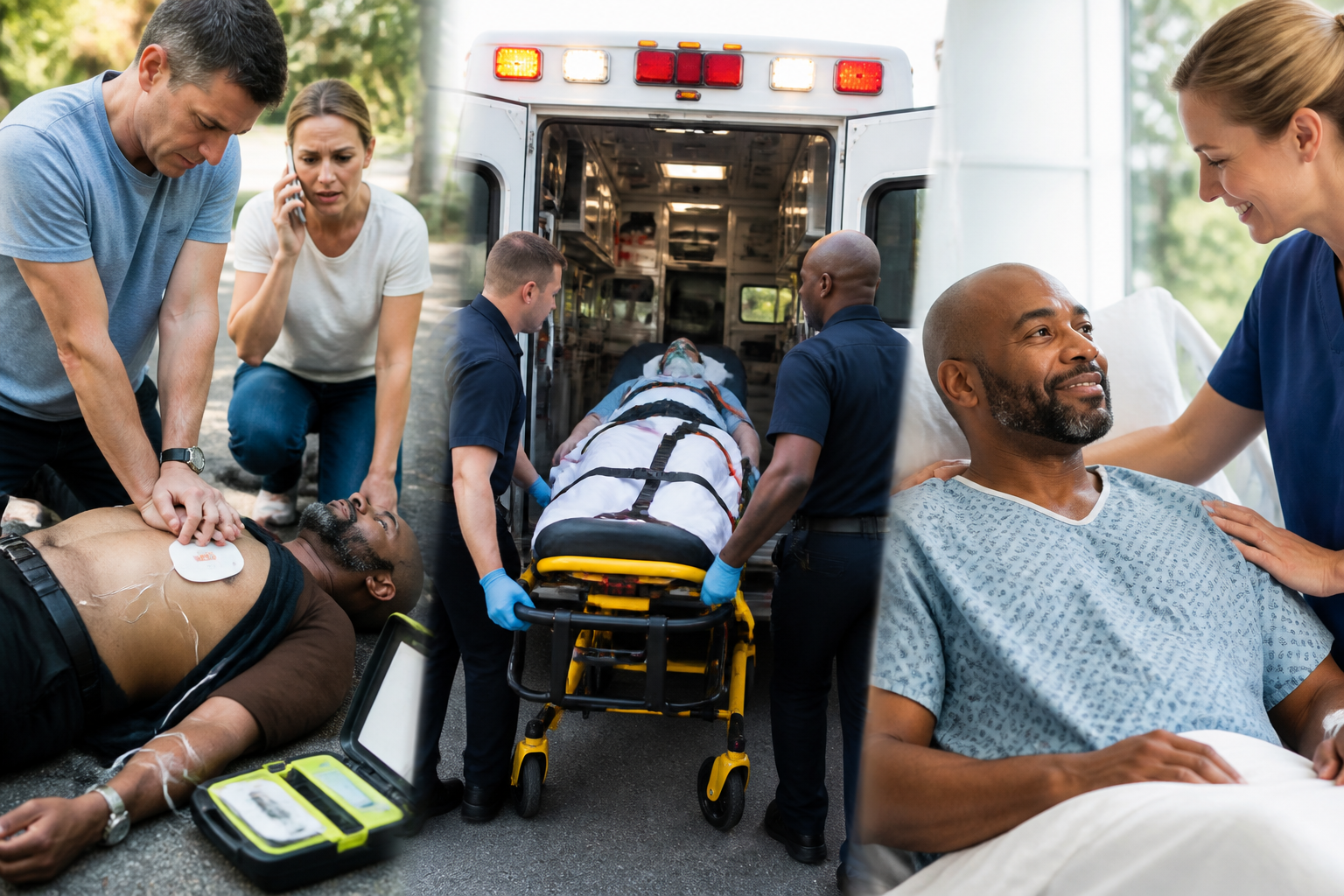
Demry Miller was at work in Granbury when he collapsed from a sudden cardiac arrest. His coworkers immediately began CPR, which helped keep oxygenated blood moving while emergency help was on the way. He was then transported by ambulance to a local hospital, where clinicians moved quickly to determine the next step in his care.
Because his condition was so serious, he was later transferred to Medical City Fort Worth for ECMO support. ECMO, or extracorporeal membrane oxygenation, is a machine that takes over the work of the heart and lungs outside the body. It can give the heart and lungs time to rest while the medical team focuses on stabilization and recovery.
For Demry and his family, the experience was frightening and unfamiliar. He was unconscious for much of the treatment, so his wife, Johnnie Miller, carried the emotional weight of the emergency. She later described the nurses and clinicians as the people who helped them through a period that felt overwhelming and hard to understand.
At a later reunion event, the Milers were able to speak with caregivers face to face. That moment mattered because it turned an intense medical crisis into a shared story of gratitude. It also gave the team a chance to see the person behind the patient file: a husband, father, and grandfather whose life continued after a near-fatal event.
Why CPR and emergency response matter in a cardiac arrest
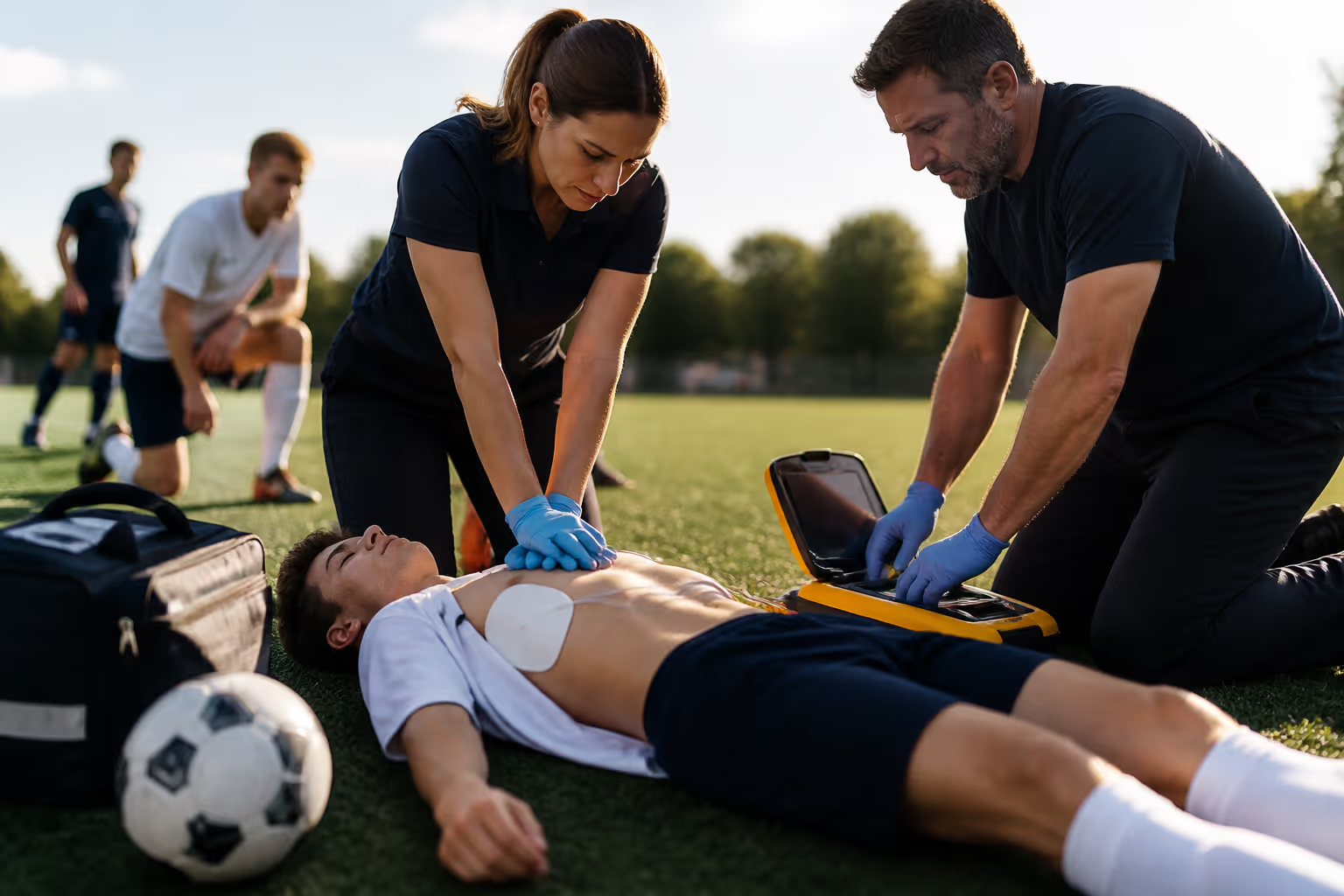
Cardiac arrest is different from a heart attack. In cardiac arrest, the heart stops pumping effectively, and the person may collapse, stop responding, or stop breathing normally. When that happens, CPR and rapid emergency response are the bridge to advanced care.
In this case, the coworkers’ decision to start CPR right away was critical. Their action supported the chain of survival before EMS arrived and before the hospital team could take over. That same chain depends on early recognition, fast transport, advanced hospital treatment, and informed decision-making by the care team.
When someone collapses and is unresponsive, do not wait to see if they recover on their own. Call 911 immediately. If an AED is available, use it as directed while continuing CPR until first responders arrive. A prepared bystander can make a real difference before the patient reaches the hospital.
What ECMO adds for critically ill patients
ECMO is used in the most serious cases when the heart, lungs, or both need temporary support. In practical terms, it acts like an outside system for circulation and oxygenation, which can be lifesaving when standard treatment is not enough. It also gives doctors more flexibility when they are considering complex procedures or trying to stabilize a patient with limited options.
At Medical City Fort Worth, the ECMO program has expanded as demand has grown. That matters for North Texas because advanced rescue care is only useful if patients can access it in time. For hospitals, EMS crews, and families, the goal is the same: keep a person alive long enough for the body to heal and for the care team to guide the next step.
The human side of ECMO is just as important as the technology. Patients may not remember the details, but families often remember every conversation, every uncertainty, and every small sign of progress. That is why reunions between survivors and caregivers can be so powerful. They show that critical care is not just about machines; it is about people helping people through a medical crisis.
Who this Fort Worth story is for
This story is relevant to healthcare professionals, workplace safety leaders, first responders, and community members who want to be ready for cardiac emergencies. It is also useful for anyone who supervises staff, cares for older adults, or wants to understand how CPR, AED use, and EMS response fit together in real life.
- Healthcare professionals: review how early escalation and specialized support can improve response during a crisis.
- Employers and coworkers: keep CPR and AED preparedness part of workplace safety planning.
- Families: learn why fast action matters when someone collapses suddenly.
- Community members: understand when to call 911 and why emergency readiness is a practical skill.
Why CPR Certification Labs is a practical next step
At CPR Certification Labs, training is focused on real-world readiness for CPR, AED use, and first aid. That matters because a cardiac emergency is rarely neat or predictable. People need training that is straightforward, hands-on, and easy to remember under pressure.
For professionals in Fort Worth, local training can support confidence in responding to workplace incidents, public emergencies, and patient-care situations. Our Fort Worth office is here for learners who want clear instruction and practical skills that connect directly to emergency response.
You can learn more or schedule training through our Fort Worth office page at Fort Worth.
Local relevance for Fort Worth and surrounding communities
Fort Worth, Granbury, and the wider Tarrant County region depend on quick coordination between bystanders, EMS teams, and hospitals when emergencies happen. This story is a reminder that the first person to act is often not a physician or a paramedic. It may be a coworker, friend, or family member who knows how to respond and does not freeze in the moment.
That is why CPR training remains so important in workplaces, schools, clinics, faith communities, and public spaces across North Texas. A nearby AED, early CPR, and rapid EMS response can help keep someone alive long enough to reach advanced care like ECMO when it is needed.
This article is for general educational purposes only and is not a substitute for professional medical advice, diagnosis, treatment, or certified CPR training. In an emergency, call 911 immediately.
FAQ
What is ECMO?
ECMO is advanced life support that temporarily supports the heart and lungs outside the body so they can rest while clinicians treat the underlying emergency.
Why does CPR matter so much during cardiac arrest?
CPR helps maintain blood flow to vital organs until EMS arrives and advanced care can begin. Fast action can buy critical time.
When should I call 911?
Call 911 right away if someone collapses, is unresponsive, or is not breathing normally. Do not wait to see whether the person improves.
About our Fort Worth office
- Address: 6940 River Park Circle
- Phone: (817) 420-7629
- Email: fortworth@cprcertificationlabs.com
- Hours:
Monday – Sunday: 7am - 8pm