Offer ends October 18.
This is some text inside of a div block.
Restart a Heart BLS Sale
RESTART99
Copy code


UDP-glucuronosyltransferase is an enzyme found in the liver that plays a crucial role in processing bilirubin, a byproduct of the normal breakdown of red blood cells. When there is a defect in this enzyme, it leads to a condition known as Gilbert's disease, characterized by slight increases in bilirubin levels in the bloodstream. This can occasionally cause a mild yellowing of the eyes. Individuals with Gilbert's disease exhibit no other symptoms and their liver enzyme levels remain completely normal. No treatment is necessary, and the prognosis is very good.The gene responsible for UDP-glucuronosyltransferase is located on chromosome 2, which is not a sex chromosome. Inheriting a single copy of the gene variant associated with Gilbert's disease is sufficient to develop the condition, making it an autosomal dominant trait. If a parent has Gilbert's disease, there is a 50% chance that they will pass the gene to each child, and any child who inherits the gene will have Gilbert's disease.Gilbert's disease is commonly observed in populations in the U.S. and Europe. It is often discovered by chance during routine blood tests, making it an incidental enzyme abnormality that does not affect overall health.
Our technology delivers immediate, actionable feedback that refines your skills in real time.
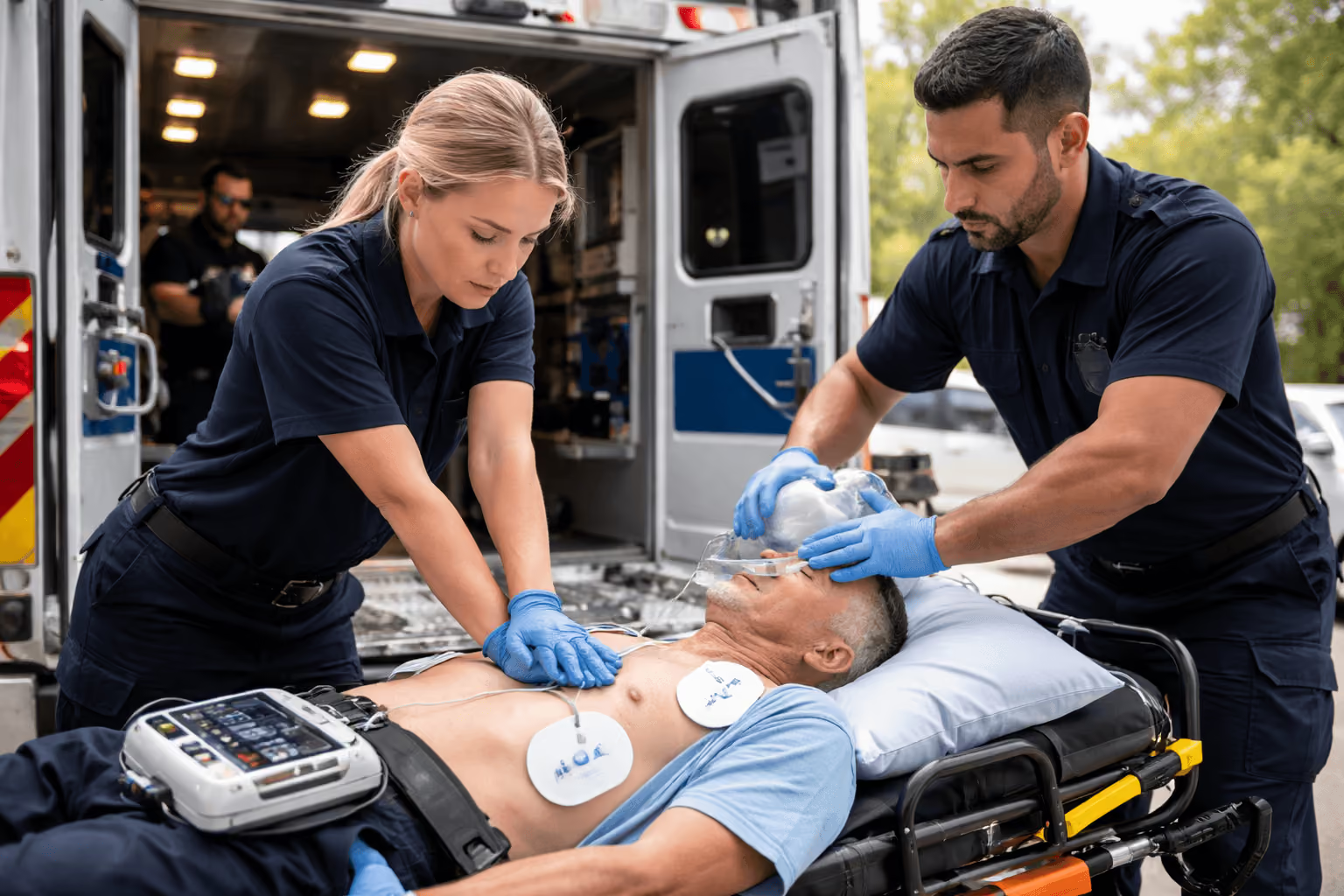
Understand how to safely and effectively operate an Automated External Defibrillator (AED) for adults, children, and infants.
Learn how to perform the Heimlich maneuver and clear airway obstructions caused by choking in both adults and infants.
Gain experience working as part of a team when more than one rescuer is available during an emergency.
Receive your AHA CPR Certification E-Card on the same day you complete the class and pass the exam.

CPR Certification Labs provides professional CPR and emergency training courses based on recognized industry standards.