Offer ends October 18.
This is some text inside of a div block.
Restart a Heart BLS Sale
RESTART99
Copy code

b.i.d. (on a prescription) indicates that a medication should be taken twice daily. This abbreviation stems from the Latin phrase "bis in die," which translates to "twice a day." Sometimes, b.i.d. is written without periods, appearing as either "bid" or "BID." Regardless of its form, it is part of a traditional set of Latin abbreviations used in prescriptions to denote how frequently medications should be administered.Other examples include:- q.d. (or qd or QD), meaning once daily, comes from "quaque die," which means "once a day" in Latin.- t.i.d. (or tid or TID) signifies taking medication three times a day, derived from "ter in die," meaning "three times a day."- q.i.d. (or qid or QID) indicates taking a dose four times daily, originating from "quater in die," which translates to "four times a day."When a prescription specifies taking a medication every certain number of hours, it uses "q_h," where "q" stands for "quaque," and "h" indicates the number of hours. For instance, "2 caps q4h" instructs the patient to take two capsules every four hours.
Our technology delivers immediate, actionable feedback that refines your skills in real time.
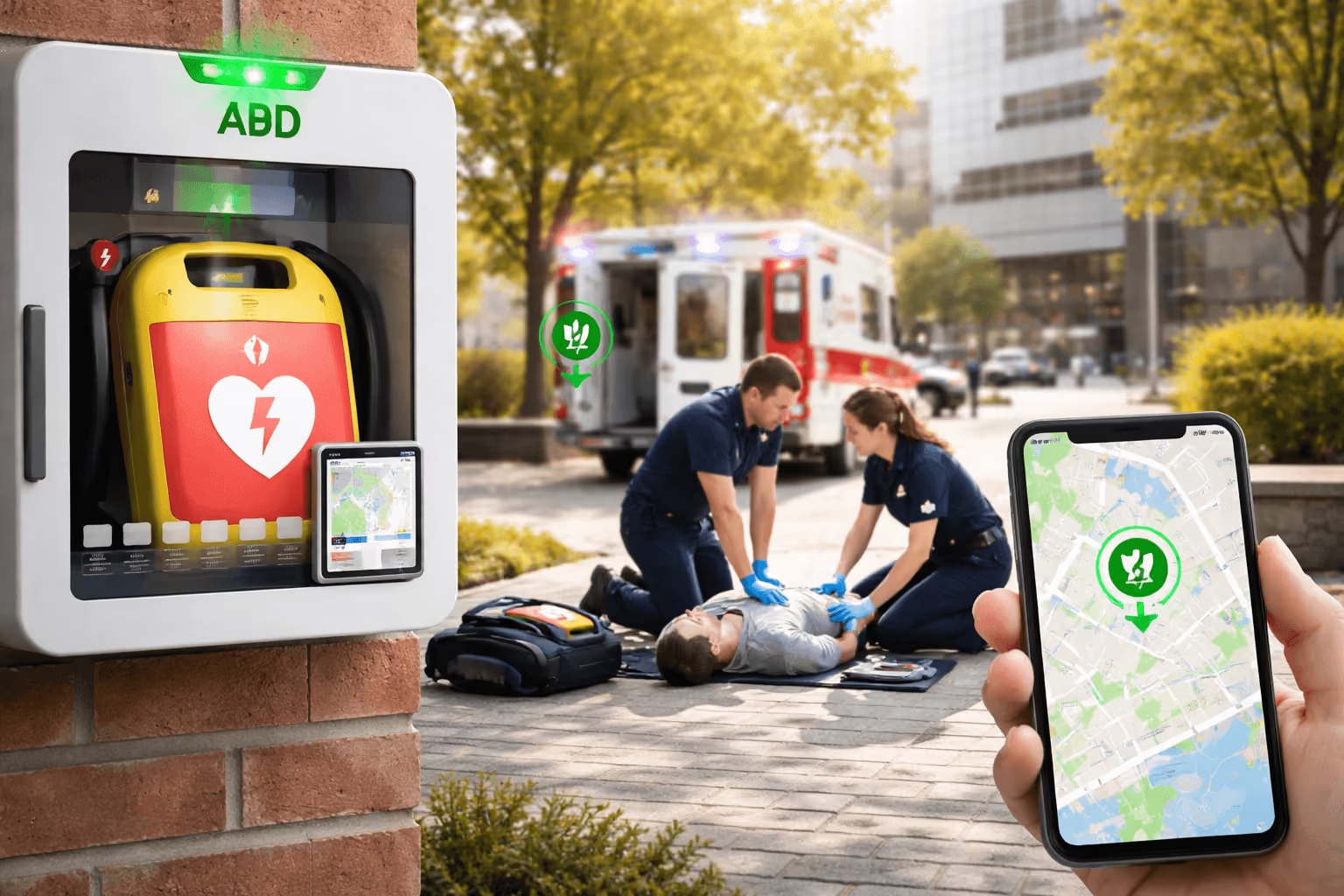
Understand how to safely and effectively operate an Automated External Defibrillator (AED) for adults, children, and infants.
Learn how to perform the Heimlich maneuver and clear airway obstructions caused by choking in both adults and infants.
Gain experience working as part of a team when more than one rescuer is available during an emergency.
Receive your AHA CPR Certification E-Card on the same day you complete the class and pass the exam.

CPR Certification Labs provides professional CPR and emergency training courses based on recognized industry standards.