Offer ends October 18.
This is some text inside of a div block.
Restart a Heart BLS Sale
RESTART99
Copy code


Ileitis, Crohn's Disease: This condition involves inflammation of the most distant part of the intestine, typically caused by Crohn's disease, a long-term inflammatory disorder. It primarily affects the small and large intestines but can also impact other body regions. Named after Dr. Crohn, who first identified it in 1932, the disease is frequently diagnosed in individuals during their teenage years or twenties, though it can appear at any age. Crohn's disease may present as a persistent condition or cause minimal symptoms, with or without medical intervention.In milder cases, Crohn's disease results in small, scattered, shallow erosions known as aphthous ulcers on the bowel's inner surface. More severe cases can lead to deeper, larger ulcers that cause scarring, stiffness, and potential narrowing of the bowel, sometimes resulting in obstruction. Deep ulcers may perforate the bowel wall, causing infections in the abdominal cavity (peritonitis) and affecting other organs.Crohn's disease manifests in various forms. If only the large intestine is involved, it is termed Crohn's colitis. When only the small intestine is affected, it is referred to as Crohn's enteritis. The ileum, the last segment of the small intestine, is most commonly affected, and active disease here is known as Crohn's ileitis. When both the small and large intestines are involved, the condition is called Crohn's enterocolitis (or ileocolitis). Other descriptive terms may also be used.Symptoms can include abdominal pain, diarrhea, vomiting, fever, and weight loss. Crohn's disease may also be linked to red, tender skin nodules and inflammation of the joints, spine, eyes, and liver. Diagnosis often involves enterography or endoscopy. Treatment typically includes anti-inflammatory medications, steroids, immune modulators, antibiotics, or surgery, which may be necessary in severe cases.Crohn's disease is a focus of active research worldwide, with new treatment methods being explored to potentially enhance the lives of those affected.
Our technology delivers immediate, actionable feedback that refines your skills in real time.
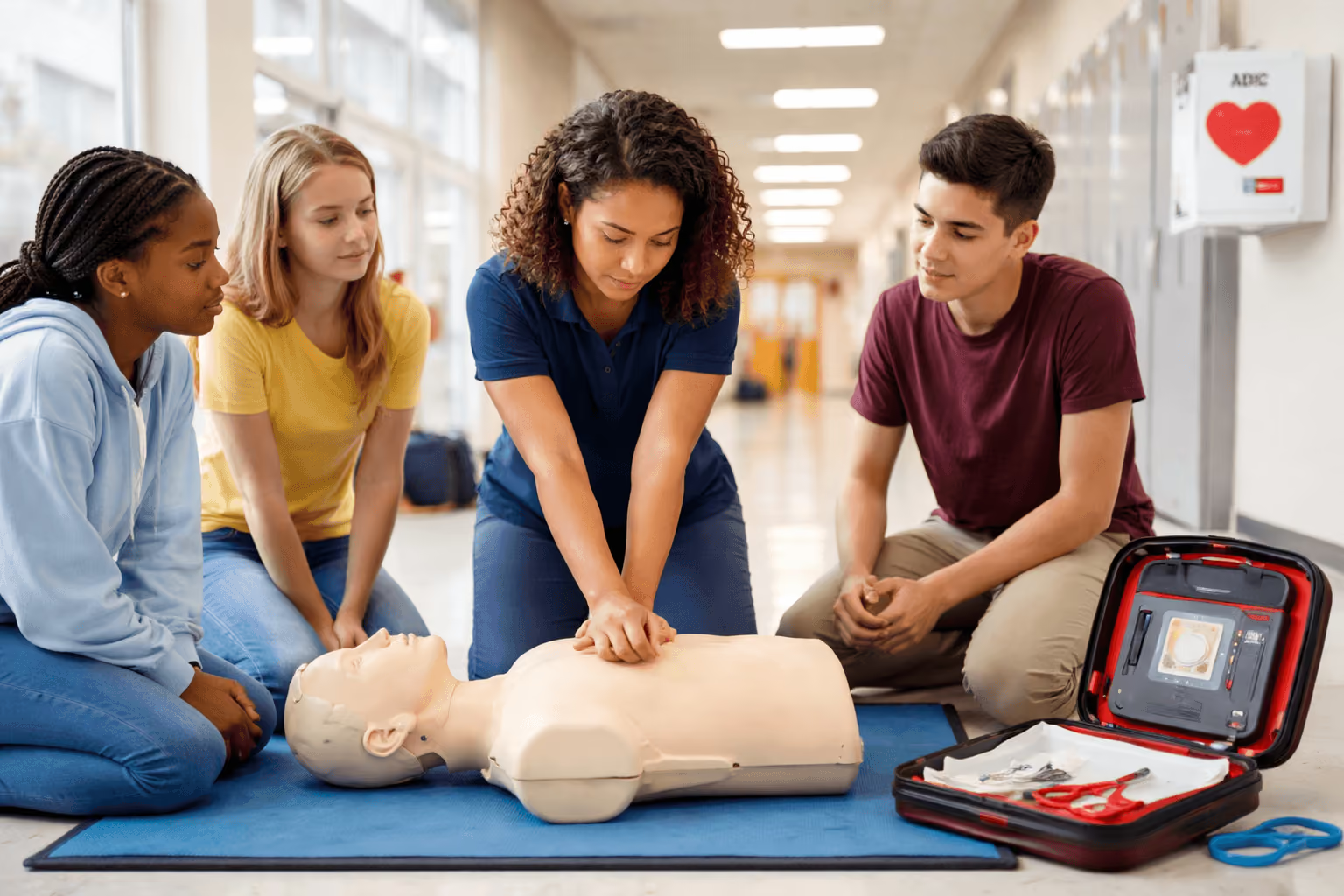
Understand how to safely and effectively operate an Automated External Defibrillator (AED) for adults, children, and infants.
Learn how to perform the Heimlich maneuver and clear airway obstructions caused by choking in both adults and infants.
Gain experience working as part of a team when more than one rescuer is available during an emergency.
Receive your AHA CPR Certification E-Card on the same day you complete the class and pass the exam.

CPR Certification Labs provides professional CPR and emergency training courses based on recognized industry standards.