Offer ends October 18.
This is some text inside of a div block.
Restart a Heart BLS Sale
RESTART99
Copy code


Prenatal development involves the growth and formation of life within the womb, starting from a single cell created by the fusion of a sperm and an egg. This cell evolves into an embryo, then a fetus, and eventually a newborn. During the initial two weeks, development focuses on the rapid multiplication of cells. These cells then attach to the uterine wall. In the following three weeks, significant cell differentiation occurs as the mass separates into distinct primitive systems. By the end of the eighth week, the embryo resembles a human figure and is known as a fetus. Over the next twenty weeks, the fetus' basic circulatory, nervous, respiratory, and other systems develop further, and it starts to move its limbs. At 28 weeks, fat deposits form beneath the skin, toenails and fingernails emerge, and fine hair appears on the body and scalp. The fetus may occasionally open its eyes. In the final weeks of development, the fetus continues to gain weight, and its internal systems fully mature.
Our technology delivers immediate, actionable feedback that refines your skills in real time.
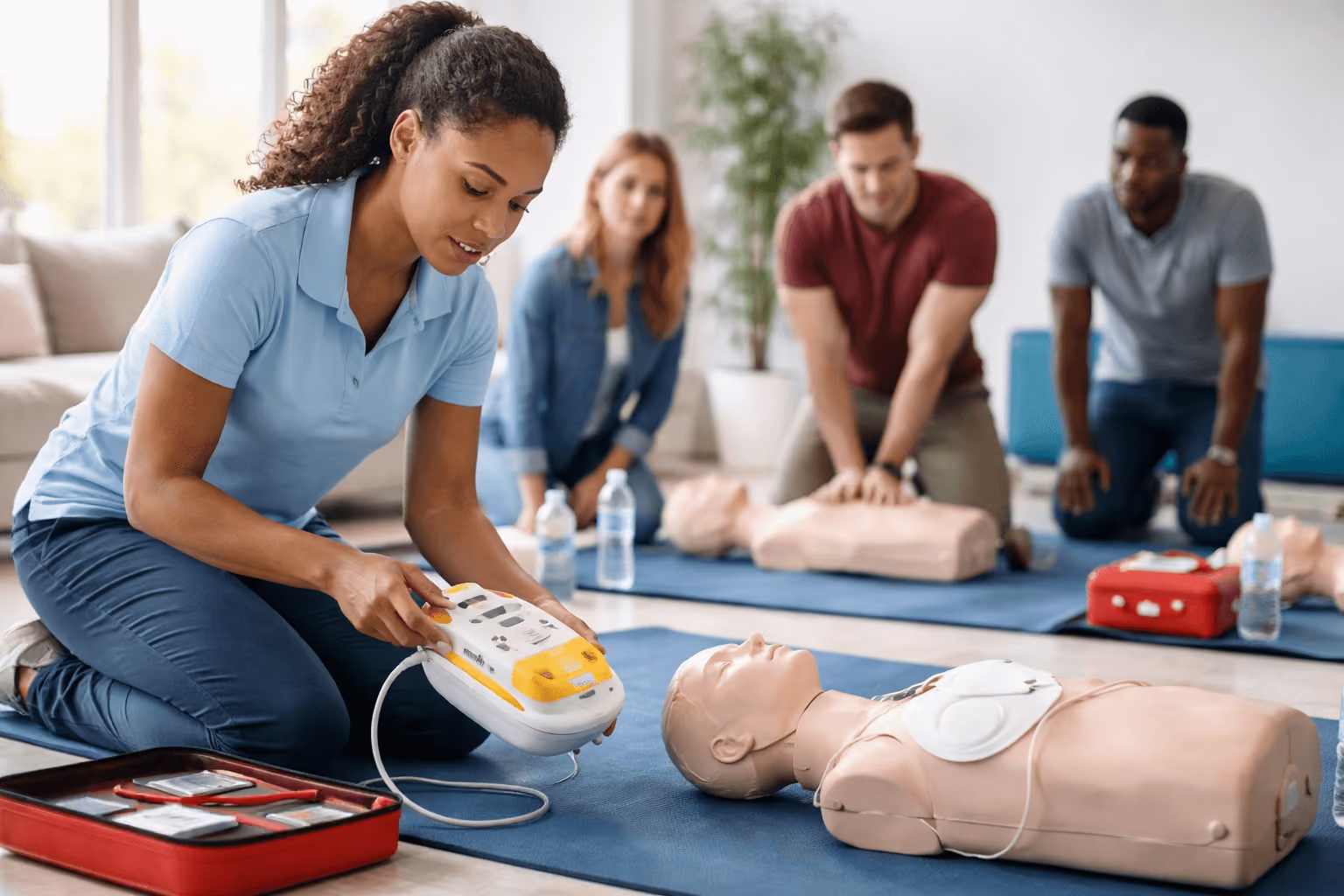
Understand how to safely and effectively operate an Automated External Defibrillator (AED) for adults, children, and infants.
Learn how to perform the Heimlich maneuver and clear airway obstructions caused by choking in both adults and infants.
Gain experience working as part of a team when more than one rescuer is available during an emergency.
Receive your AHA CPR Certification E-Card on the same day you complete the class and pass the exam.

CPR Certification Labs provides professional CPR and emergency training courses based on recognized industry standards.