Offer ends October 18.
This is some text inside of a div block.
Restart a Heart BLS Sale
RESTART99
Copy code

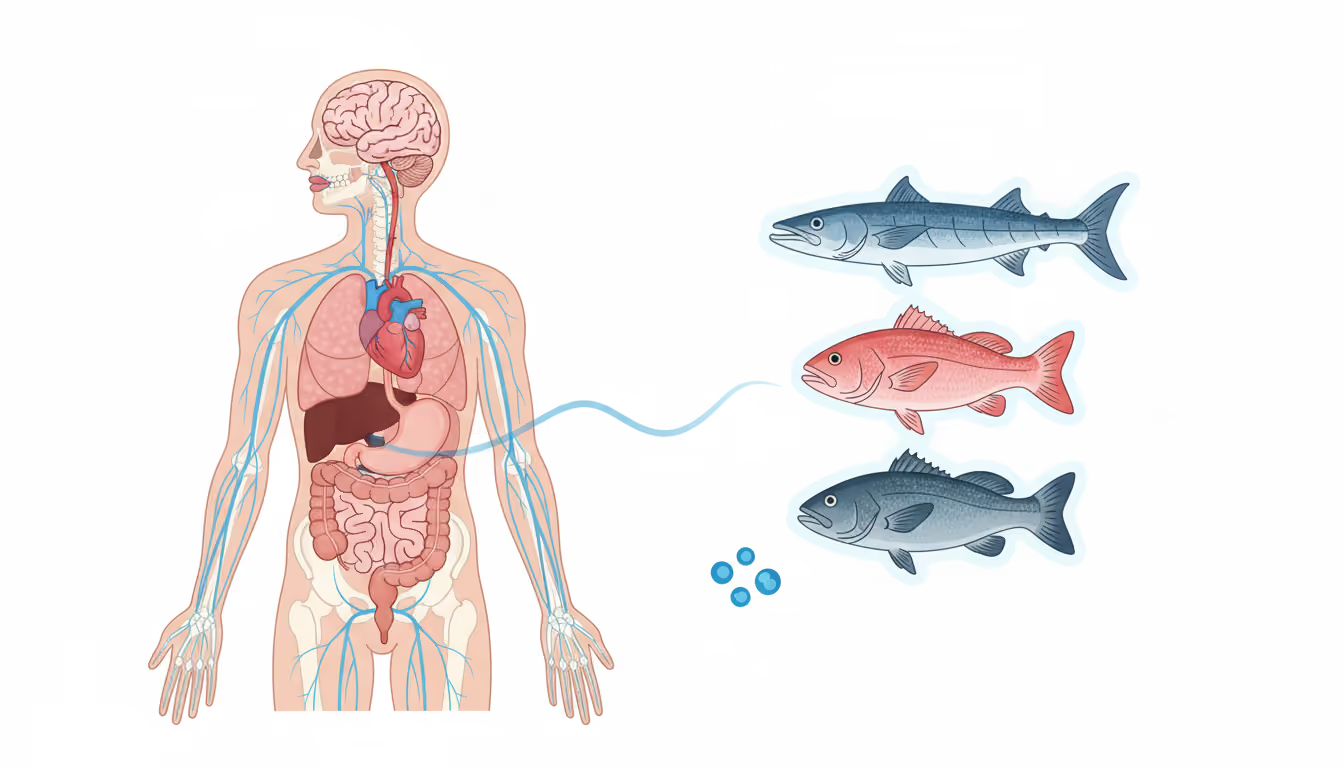
Ciguatoxin is associated with a type of seafood poisoning that occurs when people eat fish contaminated with toxic single-celled marine organisms known as dinoflagellates, or fish that have ingested other toxic fish. When these fish are consumed, individuals may experience ciguatera, a condition that leads to a variety of symptoms.Ciguatera can result in gastrointestinal issues such as abdominal pain, diarrhea, nausea, and vomiting, as well as neuromuscular complications like tingling around the lips, unusual skin sensations, temperature sensitivity reversal, lack of muscle coordination, weakness, numbness, muscle pain, and itching. Respiratory problems may also arise. Symptoms typically appear soon after eating contaminated fish and can persist or reoccur for up to six months. While fatalities are rare, they can occur.Fish carrying ciguatoxin are often found in regions such as the southeastern United States, the Bahamas, the Caribbean, Hawaii, and other tropical and subtropical areas around the world, including the central Pacific and northern Australia. Species like barracuda, amberjack, horse-eye jack, black jack, other large jacks, king mackerel, large groupers, and snappers are especially prone to contain ciguatoxin, though many other large predatory fish may also be affected.
Our technology delivers immediate, actionable feedback that refines your skills in real time.
Understand how to safely and effectively operate an Automated External Defibrillator (AED) for adults, children, and infants.
Learn how to perform the Heimlich maneuver and clear airway obstructions caused by choking in both adults and infants.
Gain experience working as part of a team when more than one rescuer is available during an emergency.
Receive your AHA CPR Certification E-Card on the same day you complete the class and pass the exam.

CPR Certification Labs provides professional CPR and emergency training courses based on recognized industry standards.