Offer ends October 18.
This is some text inside of a div block.
Restart a Heart BLS Sale
RESTART99
Copy code

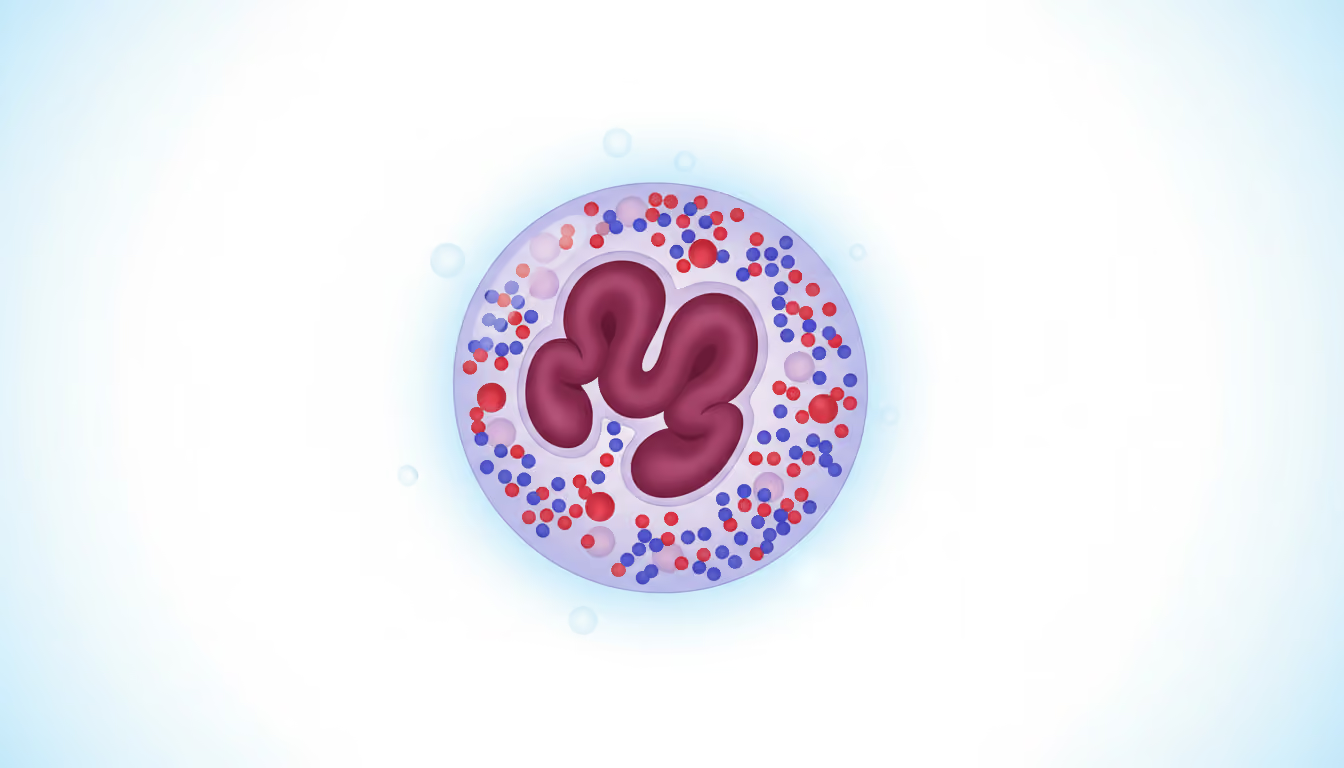
Granular leukocytes are a type of white blood cell that contain tiny sacs filled with enzymes designed to break down microorganisms. Also known as granulocytes, they belong to the innate immune system and possess a broad, non-specific activity, unlike B-cells and T-cells that target specific antigens. Granulocytes include neutrophils, eosinophils, and basophils, each named according to how their granules stain in laboratory tests. Neutrophils have granules that show "neutral" staining, eosinophils contain granules that easily stain with the acid dye eosin, and basophils have granules that take up basic dyes. This method of classification dates back to a time when cellular structures were identified through histochemistry, even though their functions were not fully understood. Despite this, classifying granulocytes as neutrophils, eosinophils, and basophils remains both prevalent and practical today.
Our technology delivers immediate, actionable feedback that refines your skills in real time.
Understand how to safely and effectively operate an Automated External Defibrillator (AED) for adults, children, and infants.
Learn how to perform the Heimlich maneuver and clear airway obstructions caused by choking in both adults and infants.
Gain experience working as part of a team when more than one rescuer is available during an emergency.
Receive your AHA CPR Certification E-Card on the same day you complete the class and pass the exam.

CPR Certification Labs provides professional CPR and emergency training courses based on recognized industry standards.