Offer ends October 18.
This is some text inside of a div block.
Restart a Heart BLS Sale
RESTART99
Copy code


Anophthalmia, often referred to as an absent eye, is characterized by the absence of the eye globe. Technically, anophthalmia means there is no globe or associated tissue present. However, in most instances, scans reveal some remnants of the globe, which suggests the condition is actually severe microphthalmia, meaning the eyes are underdeveloped. This condition can affect one or both eyes and may occur alone without any other abnormalities or as part of a broader syndrome. Anophthalmia/microphthalmia may be associated with syndromes such as congenital rubella, triploidy (caused by having 69 chromosomes), trisomy 13 (Patau syndrome, due to an extra chromosome 13), and Wolf-Hirschhorn syndrome (resulting from a deletion on the short arm of chromosome 4). The term anophthalmia is derived from the Greek words "an-" meaning absence, and "ophthalmos" meaning eye, indicating the absence of the eye.
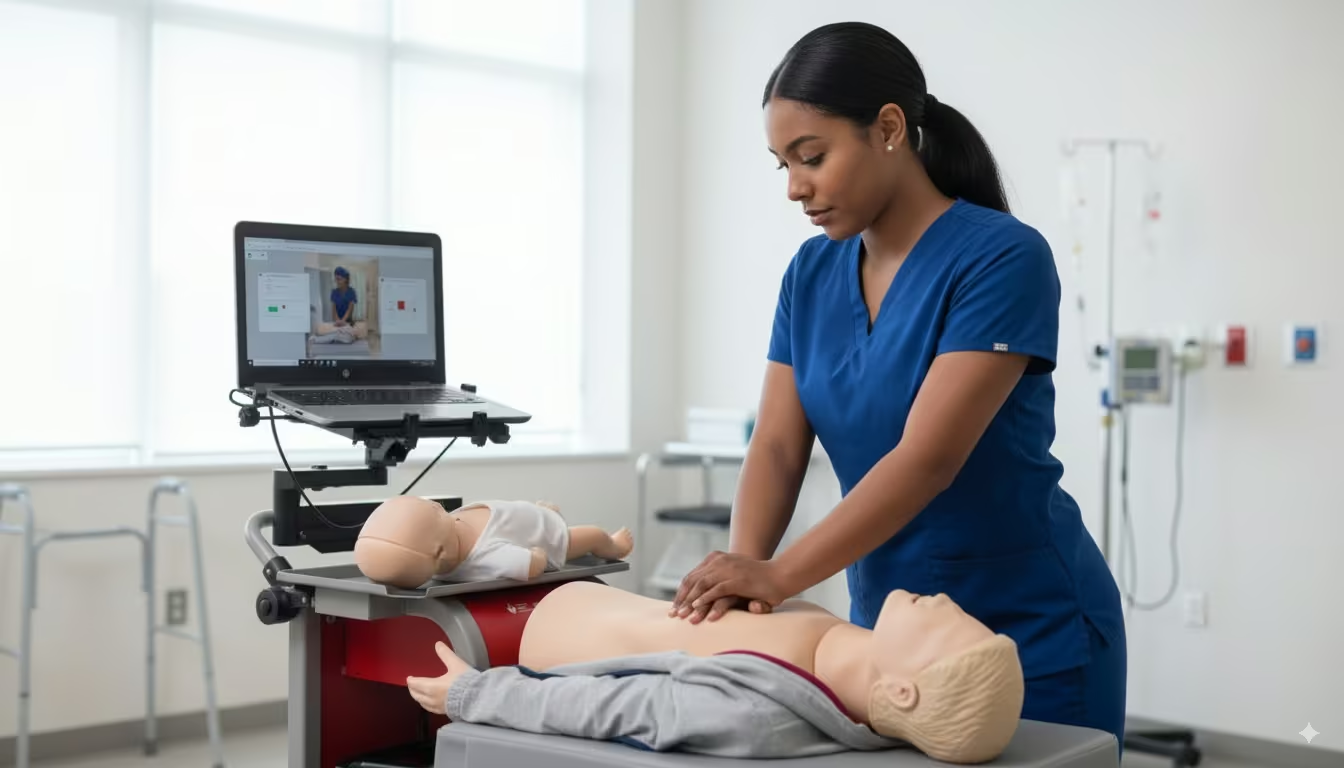
Our technology delivers immediate, actionable feedback that refines your skills in real time.
Understand how to safely and effectively operate an Automated External Defibrillator (AED) for adults, children, and infants.
Learn how to perform the Heimlich maneuver and clear airway obstructions caused by choking in both adults and infants.
Gain experience working as part of a team when more than one rescuer is available during an emergency.
Receive your AHA CPR Certification E-Card on the same day you complete the class and pass the exam.

CPR Certification Labs provides professional CPR and emergency training courses based on recognized industry standards.