Offer ends October 18.
This is some text inside of a div block.
Restart a Heart BLS Sale
RESTART99
Copy code

Palliative care:Palliative care is aimed at managing a disease to the extent possible without attempting a full cure. It serves to mask or mitigate the disease's impact. For example, consider a 91-year-old man diagnosed with a lung tumor. Due to his advanced age and the understanding that cancer generally progresses more slowly in older individuals, he did not undergo chest surgery. Instead, he received treatment to slow the tumor's growth, which is a form of palliation rather than a cure.The term "pallium" originally described a cloak in ancient Greek and Roman culture and later referred to a white woolen band worn by the pope or an archbishop, signifying full episcopal authority. From "pallium" came the word "palliate," which means to cover or conceal. In modern language, "palliation" suggests the masking or easing of negative effects associated with wickedness or illness.
Our technology delivers immediate, actionable feedback that refines your skills in real time.
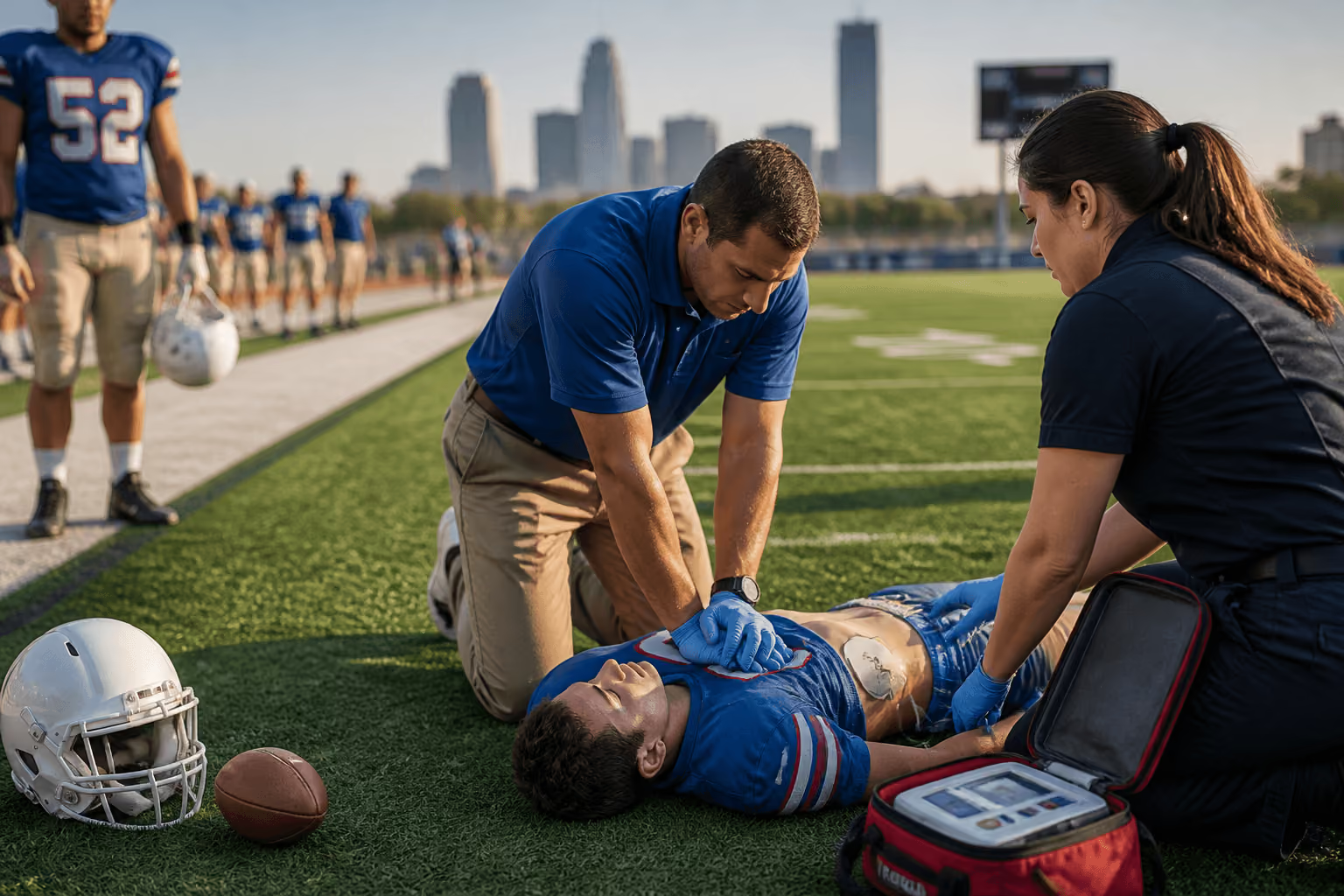
Understand how to safely and effectively operate an Automated External Defibrillator (AED) for adults, children, and infants.
Learn how to perform the Heimlich maneuver and clear airway obstructions caused by choking in both adults and infants.
Gain experience working as part of a team when more than one rescuer is available during an emergency.
Receive your AHA CPR Certification E-Card on the same day you complete the class and pass the exam.

CPR Certification Labs provides professional CPR and emergency training courses based on recognized industry standards.