Offer ends October 18.
This is some text inside of a div block.
Restart a Heart BLS Sale
RESTART99
Copy code

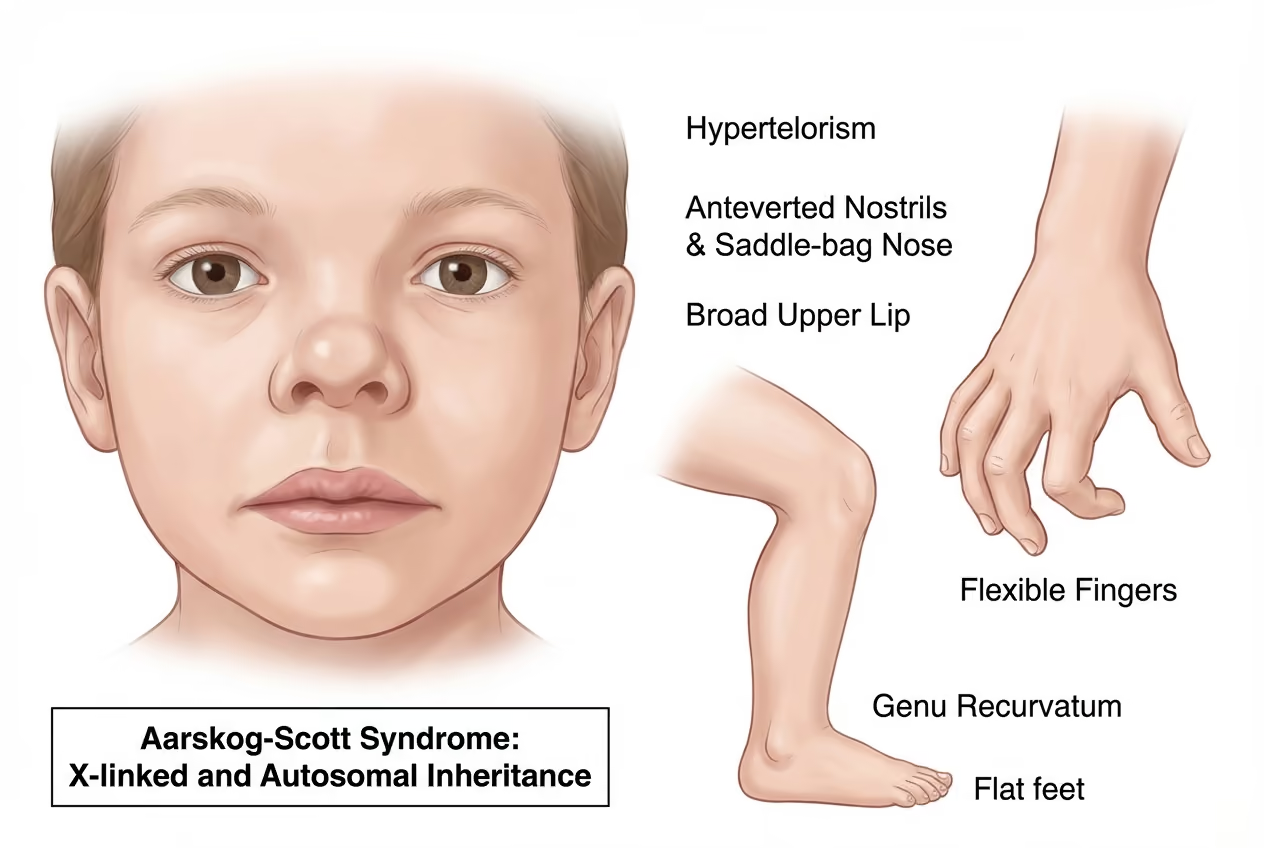
Aarskog-Scott syndrome is characterized by features such as widely spaced eyes (hypertelorism), nostrils that face forward (anteverted), a broad upper lip, a malformed nose often described as "saddle-bag" shaped, and loose ligaments that cause the knees to bend backward (recurvatum), along with flat feet and fingers that are excessively flexible. The condition can be passed down through both X-linked and autosomal inheritance. The gene associated with the X-linked type is located on chromosome band Xp11.21 and is known as the FGD1 gene. This syndrome was first described by pediatricians DJ Aarskog from Norway and CI Scott, Jr. from the United States in 1970 and 1971, respectively. It is also referred to as faciodigitogenital or faciogenital dysplasia.
Our technology delivers immediate, actionable feedback that refines your skills in real time.
Understand how to safely and effectively operate an Automated External Defibrillator (AED) for adults, children, and infants.
Learn how to perform the Heimlich maneuver and clear airway obstructions caused by choking in both adults and infants.
Gain experience working as part of a team when more than one rescuer is available during an emergency.
Receive your AHA CPR Certification E-Card on the same day you complete the class and pass the exam.

CPR Certification Labs provides professional CPR and emergency training courses based on recognized industry standards.